This page is not just a list of services, but a map of possibilities. We created it to help you navigate modern dentistry and understand how we can solve your specific problem—whether it's routine treatment or creating the smile of your dreams. Our approach is simple: we listen carefully, diagnose thoroughly, and offer an honest, clear plan to achieve the best possible result.
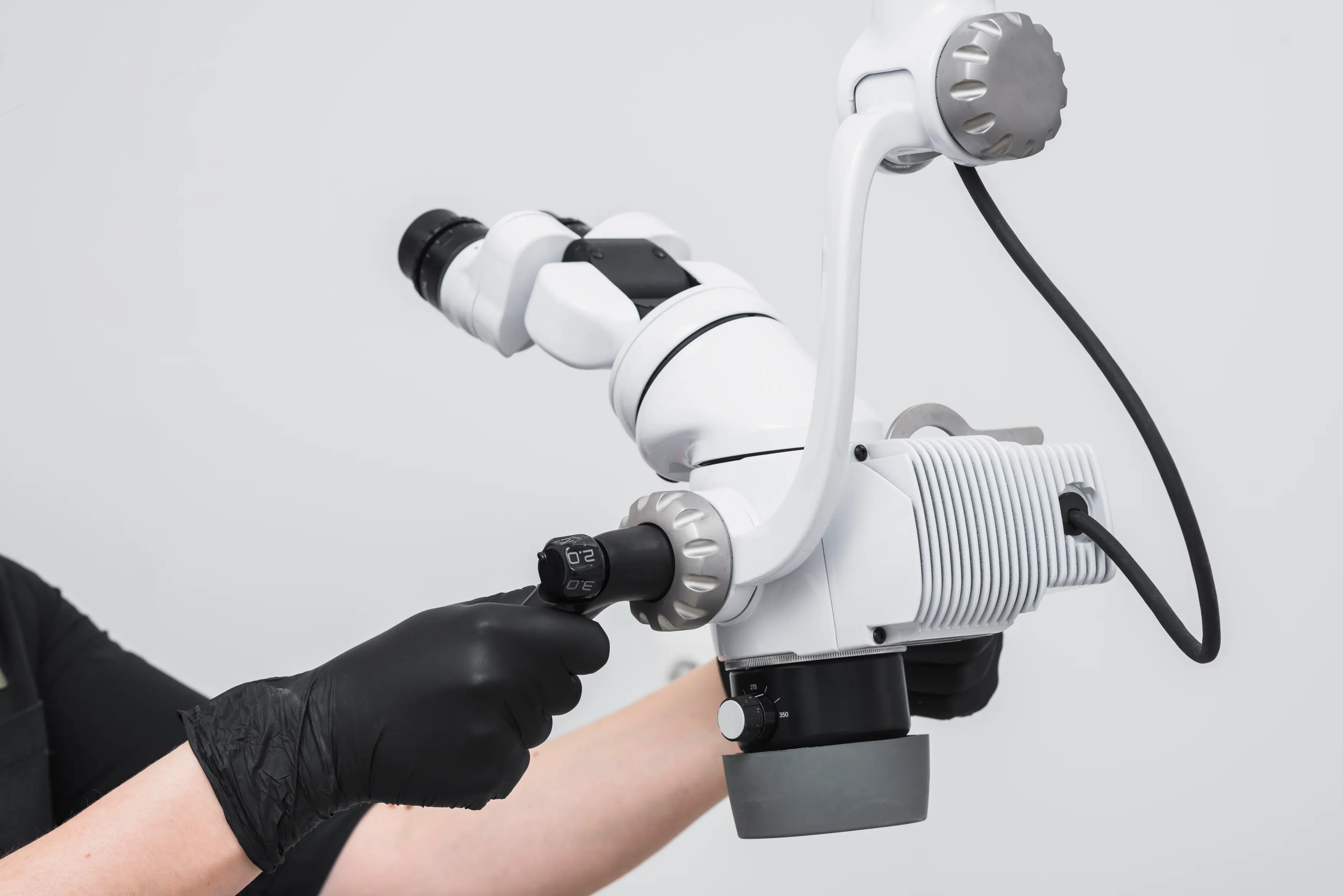
Dentists recommend undergoing professional hygiene every 6 months. It is the best way to prevent cavities and gum disease, remove plaque that a regular toothbrush can't handle, and maintain the long-term health of your teeth and restorations.
Yes, 100%. We use effective and safe local anesthesia, which completely eliminates any painful sensations. Your comfort and peace of mind are our top priority.
Absolutely not. Thanks to the wide range of shades available in modern materials, we select a color that blends perfectly with your tooth. After the final polishing, the restoration becomes completely invisible.
It is the restoration of a tooth using modern composite (photopolymer) materials that perfectly replicate the color and transparency of your enamel. We can do more than just place a filling; we can completely recreate the natural shape of the tooth, fix minor chips, or correct its form.
This field is for you if: you have a toothache (constant or triggered by sweet/cold things), you've noticed a dark spot or a 'hole' in a tooth, a piece of your tooth or an old filling has chipped off, a tooth has become sensitive, or you simply need a routine cleaning.

When care recommendations are followed and regular hygiene appointments are attended, modern zirconia or ceramic crowns and veneers can last for 15-20 years or longer without changing their color or shine.
No, all procedures are performed under high-quality local anesthesia, so you will not feel any discomfort. Additionally, while the permanent restoration is being fabricated, we will place a temporary one, so you won't have to go around with prepared ('shaved down') teeth.
A veneer is a thin ceramic shell that is bonded only to the front surface of a tooth and is used mainly to improve aesthetics (color, shape). A crown is a 'cap' that covers the entire tooth and is used when a tooth is severely damaged and needs to be strengthened.
Not at all. If the tooth's root is healthy, we can restore it with a crown. It will completely cover the visible part of the tooth, protect it from further damage, and restore its original appearance and function.
This field is for you if: you are missing one or more teeth, a tooth is too damaged to be restored with a filling, you are unhappy with the shape or color of your teeth, or you have old, unattractive crowns that you wish to replace.
.webp)
This field is for you if: you need a tooth extracted (including 'wisdom teeth'), you want to restore a missing tooth with an implant, or you require gum correction or bone grafting for a future implantation.
No. The entire procedure is performed under powerful and effective local anesthesia, which completely blocks any painful sensations. Modern atraumatic techniques allow us to perform the extraction quickly and gently, which significantly eases and accelerates the healing process.
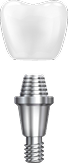
Actually, it is one of the most predictable and well-established procedures in dentistry. Thanks to thorough 3D planning, the doctor knows the exact position of the implant in advance. The placement itself is often quicker and more comfortable than a root canal treatment.
This means that to ensure the reliable placement of an implant, a strong 'foundation' must be created. The bone augmentation procedure (bone grafting) allows us to increase the bone volume and create ideal conditions for the long-term success of the implant. This is a standard and safe preparatory step.
In most cases, the main discomfort subsides within 1-3 days. We provide detailed and clear aftercare instructions that help make the healing process as quick and easy as possible.
.webp)
This field is for you if: you are unhappy that your teeth are crooked, have gaps between them, or, conversely, are crowded. An orthodontic consultation is also necessary for bite problems, clicking in the jaw joint, or if you notice that some teeth are wearing down faster than others.
Absolutely not! Modern orthodontics has no age limits. You can straighten your teeth and correct your bite at 30, 40, 50+, and beyond. For adult patients, we have many aesthetic and discreet solutions, such as ceramic braces or clear aligners.
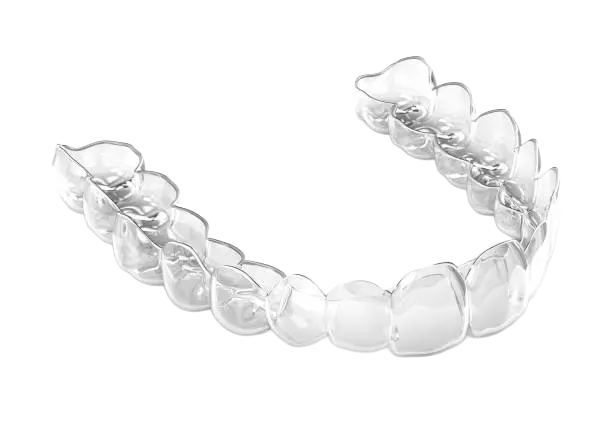
Both methods are very effective but work differently. A braces system is a non-removable appliance that can handle the most complex cases. Aligners are a series of clear, removable trays that are ideal for those who value maximum aesthetics and comfort. The doctor will determine which method is right for you after a thorough diagnosis.
After the system is installed and activated, some minor discomfort or a feeling of pressure on the teeth is possible for the first few days — this is normal as they begin to move. These sensations pass quickly. Modern braces systems are designed to be as comfortable as possible for the patient.
The treatment duration is always individual and depends on the complexity of your situation. On average, the active treatment period lasts from 1 to 2.5 years. The doctor can provide a more precise prognosis after a complete diagnosis and the creation of a treatment plan.

We recommend scheduling the first introductory visit when the first teeth appear, around the age of 1. The goal of this visit is not treatment, but to acquaint the child with the doctor and the clinic environment in a playful way. This helps to form a positive attitude towards the dentist from a very early age.
This is perfectly normal. We never begin treatment 'by force.' Our approach is based on psychological adaptation: we introduce the child to the instruments, show them cartoons, talk with them, and turn the process into a game. Sometimes, it may take a few visits for the child to get comfortable and begin to trust us.
This is one of the most significant misconceptions. Healthy primary (baby) teeth are key to the proper development of the jaw and the health of permanent teeth. The premature extraction of a baby tooth due to decay can lead to the shifting of adjacent teeth and future bite problems. Furthermore, a cavity is a source of infection that can harm the entire body.
Yes. We use only special, modern, and safe anesthetics designed specifically for a child's body. The dosage is calculated individually, and the numbing procedure itself is done as gently as possible so that the child experiences neither pain nor stress.
We do everything to ensure the procedure is as quick and comfortable as possible. After effective numbing, the child will feel nothing but light pressure. We always explain to the child that the 'tooth will just wiggle a bit and then go to the tooth fairy,' creating a positive mindset.

%20-%2025-08-2025%2017-26-12%201.png)